Work HProduce
Rethinking how cement plants operate.
- Role
- Design Lead
- Duration
- Approx. 4 years
- Scope
- Five products
- Recognition
- UX Design Award 2023
- Impact
- €16M saved per year in operations
Context
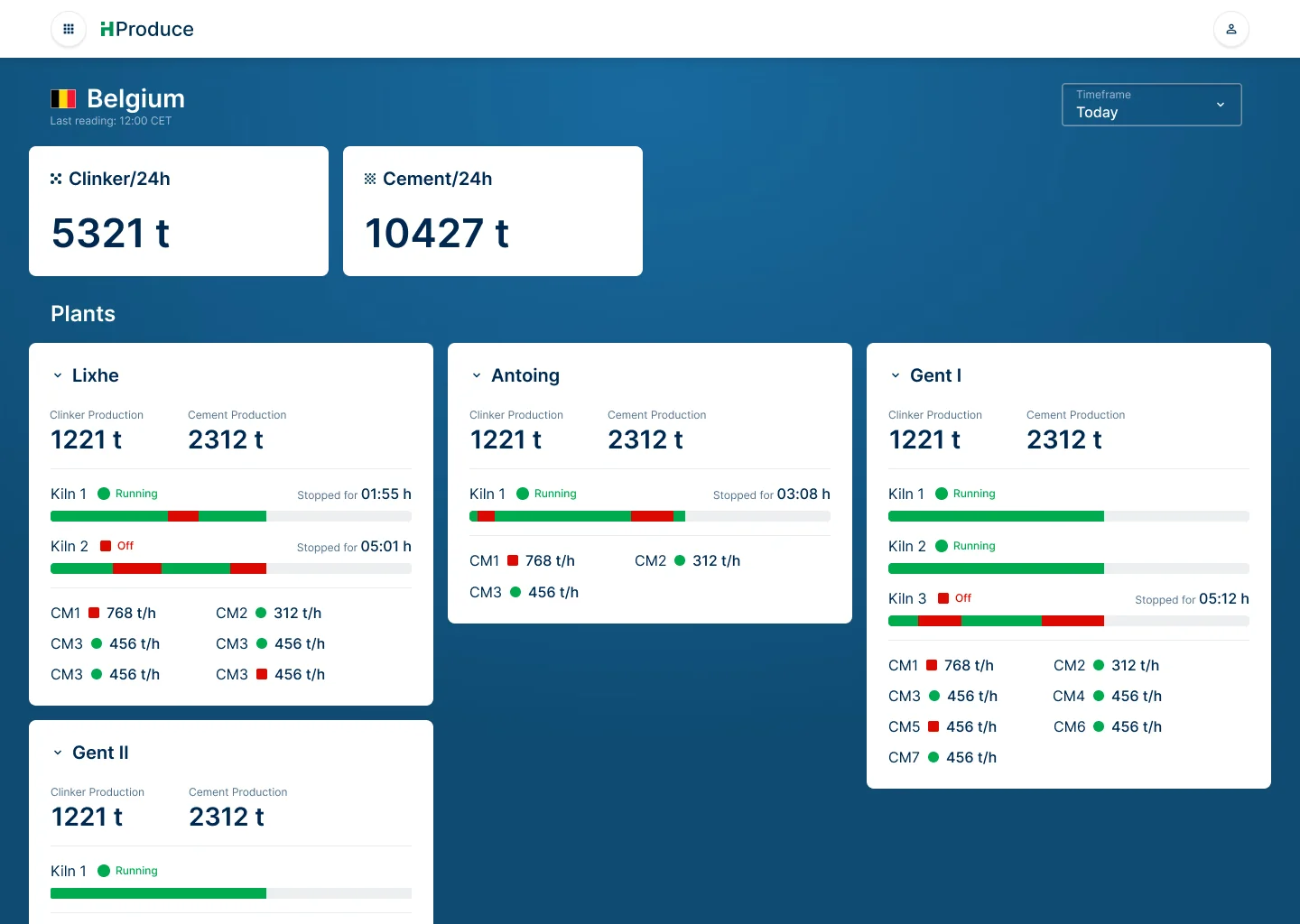
HProduce is Heidelberg Materials’ in-house suite of digital products for cement operations. It brings together solutions for areas ranging from production planning and quality to downtime, maintenance and root-cause analysis.
Internally, it is described as one of the pillars of the company’s digitalization strategy: increasing operational efficiency, reducing production costs and environmental impact, and supporting data-driven decisions.
My role wasn’t to design one of those products. I worked across them.
The challenge
Digitizing a cement plant isn’t one product problem. Planning affects production. Production affects quality. Equipment availability affects both. Materials and plant structures need to be understood consistently across applications.
Yet the suite had individual workstreams and Product Owners. That creates a UX challenge that goes beyond individual interfaces.
The need for a cross-product perspective became increasingly visible. Settings, plant structures, materials, navigation, dashboards and AI capabilities kept coming up in internal discussions: topics that could not be solved meaningfully inside individual product silos.
How do you make independently evolving products feel and work like one system?
The suite
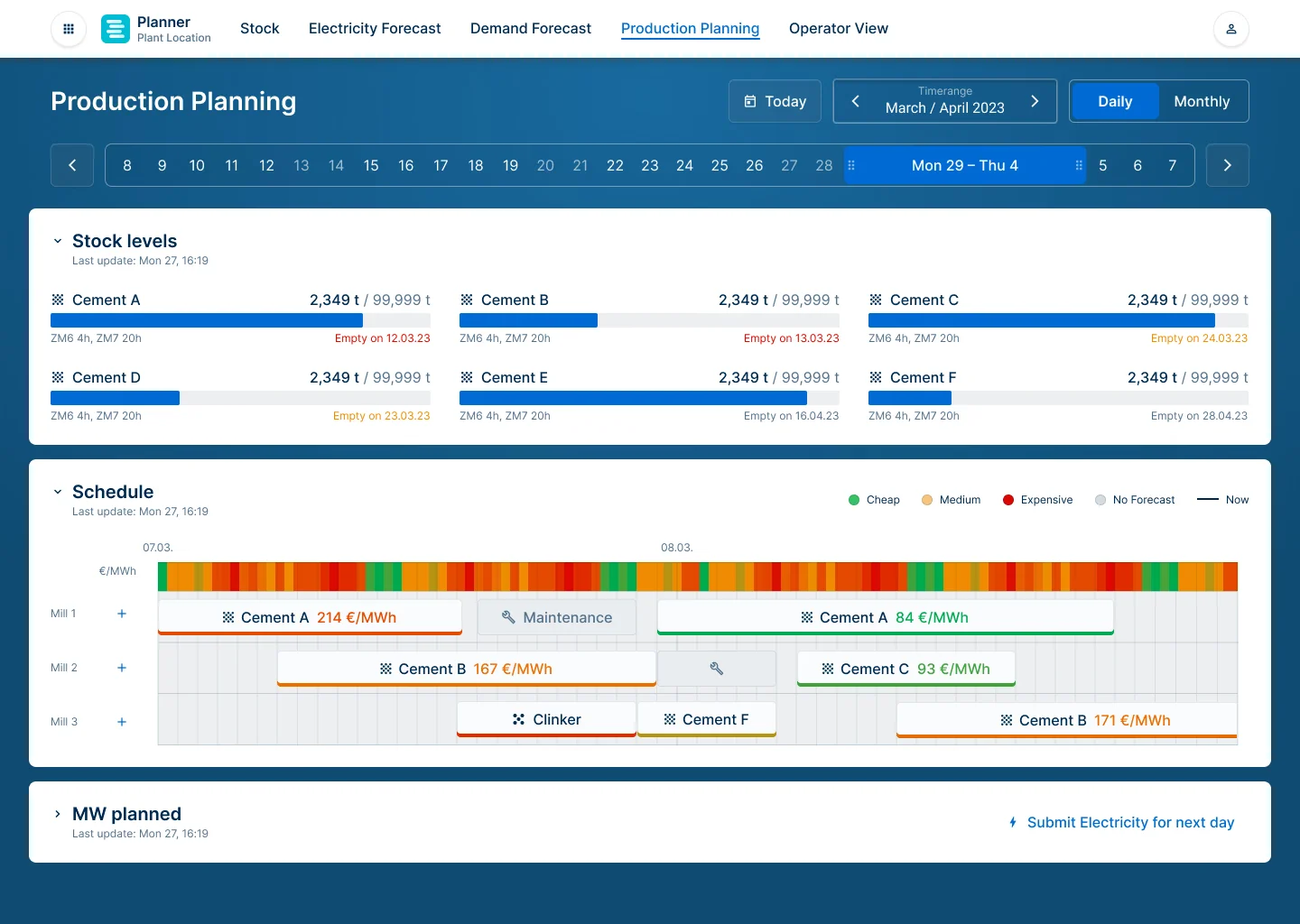
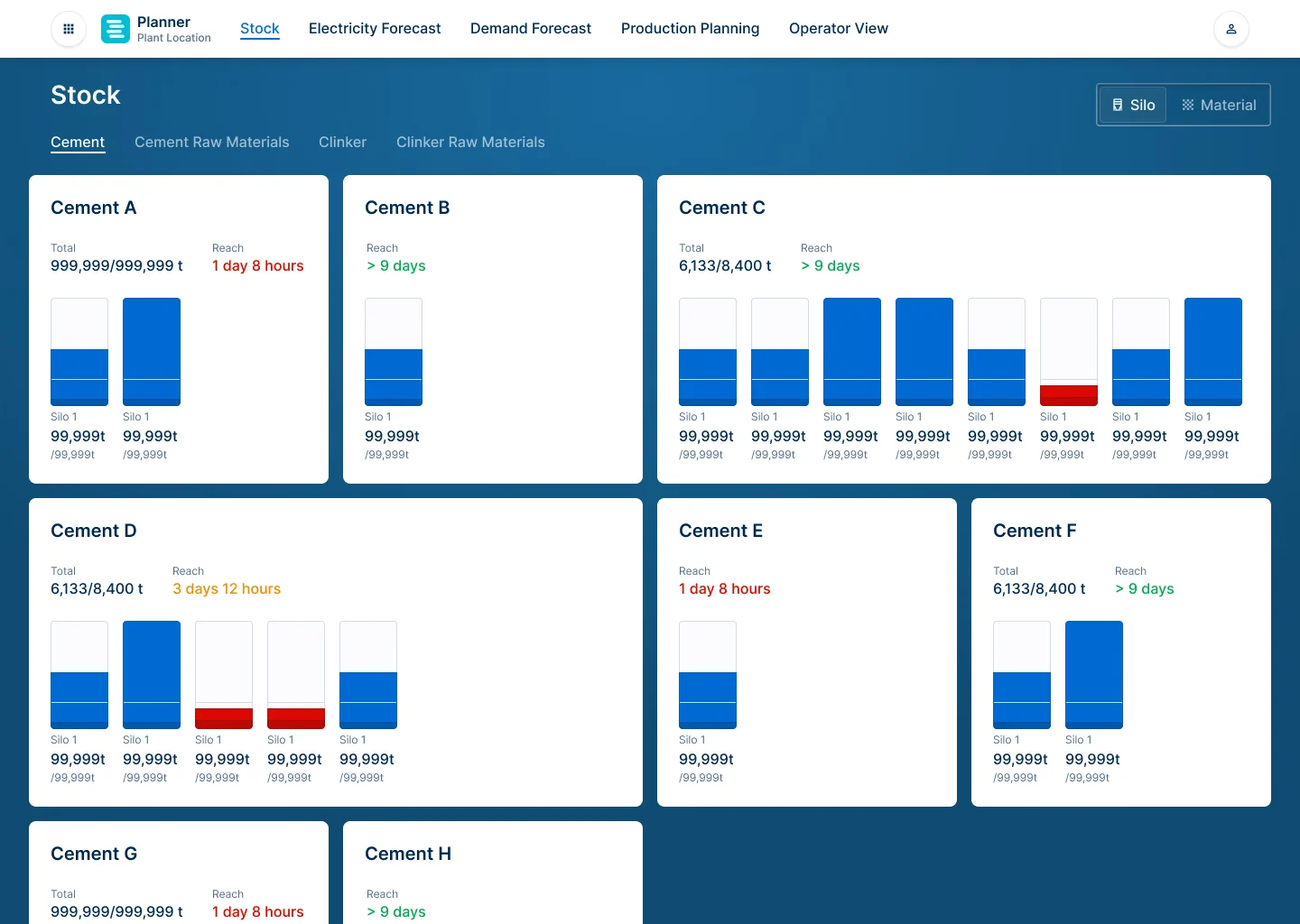
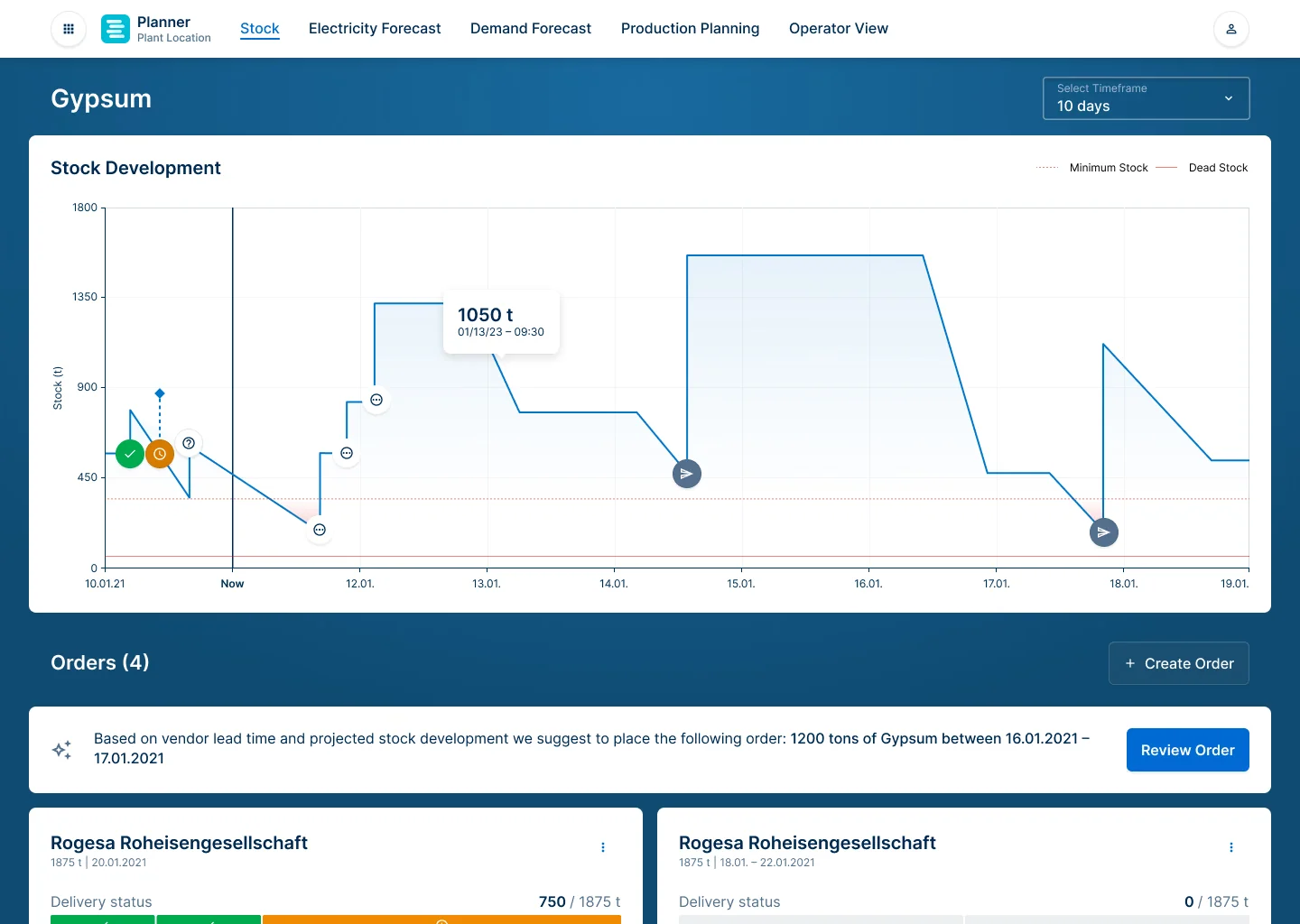
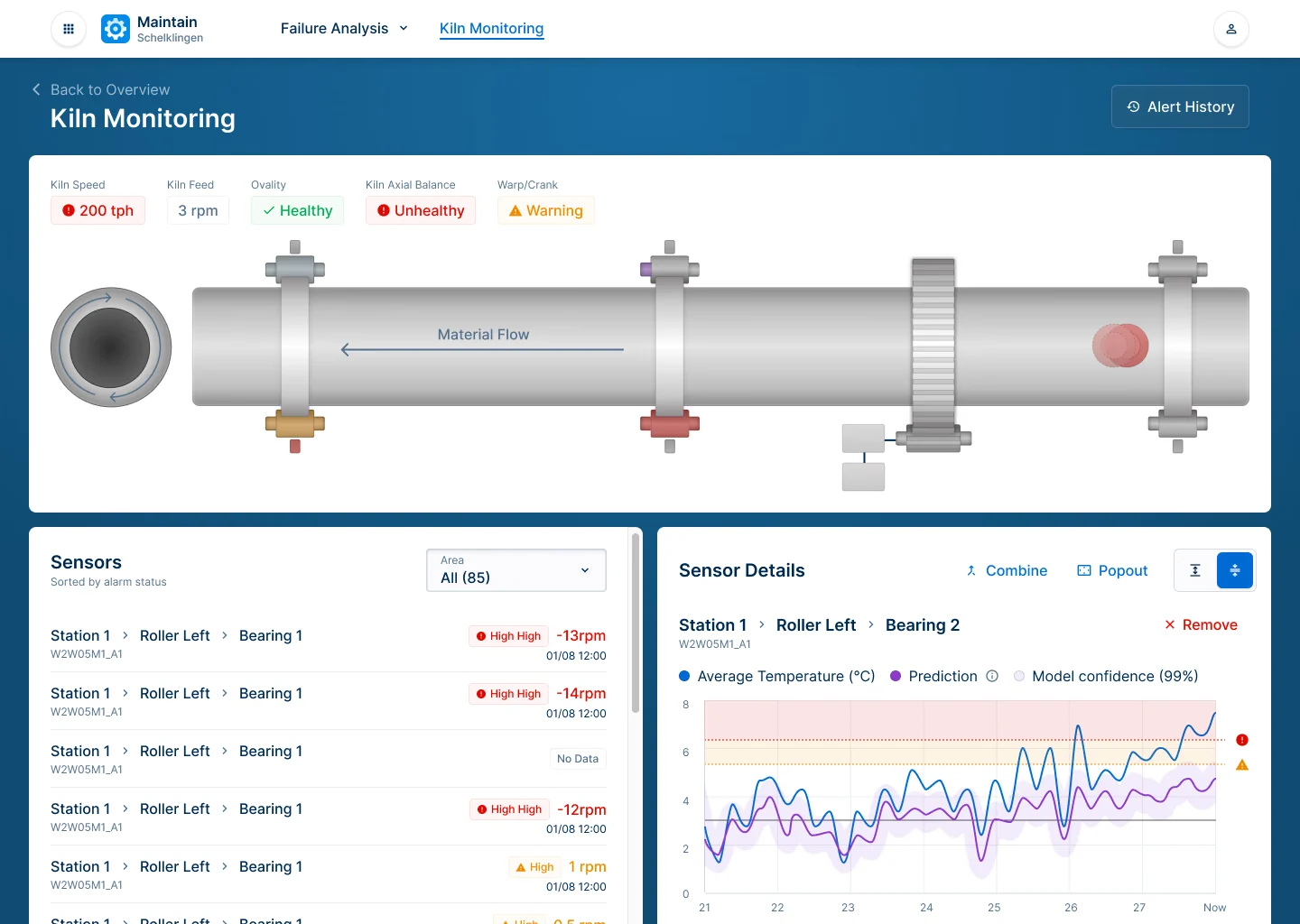
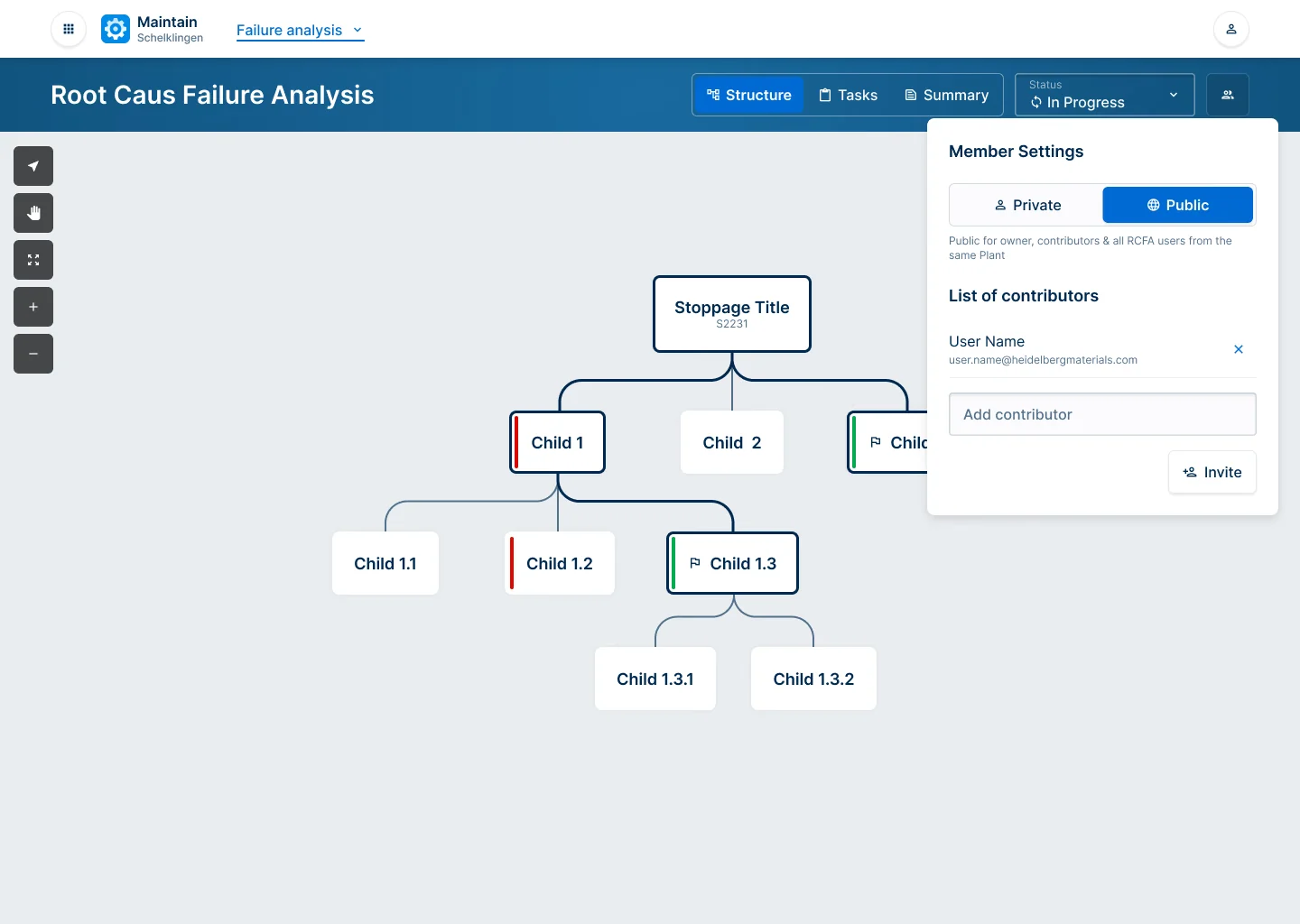
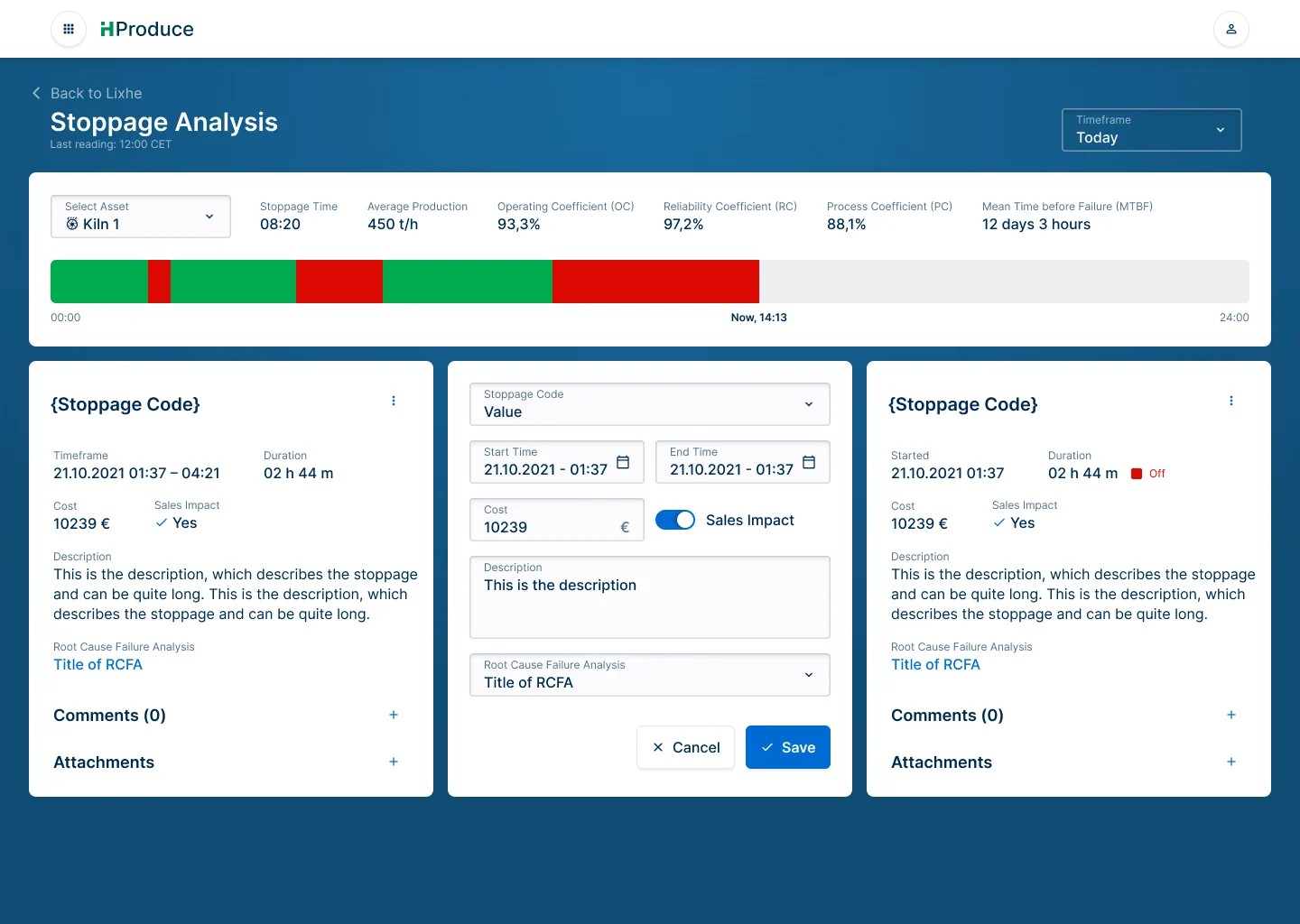
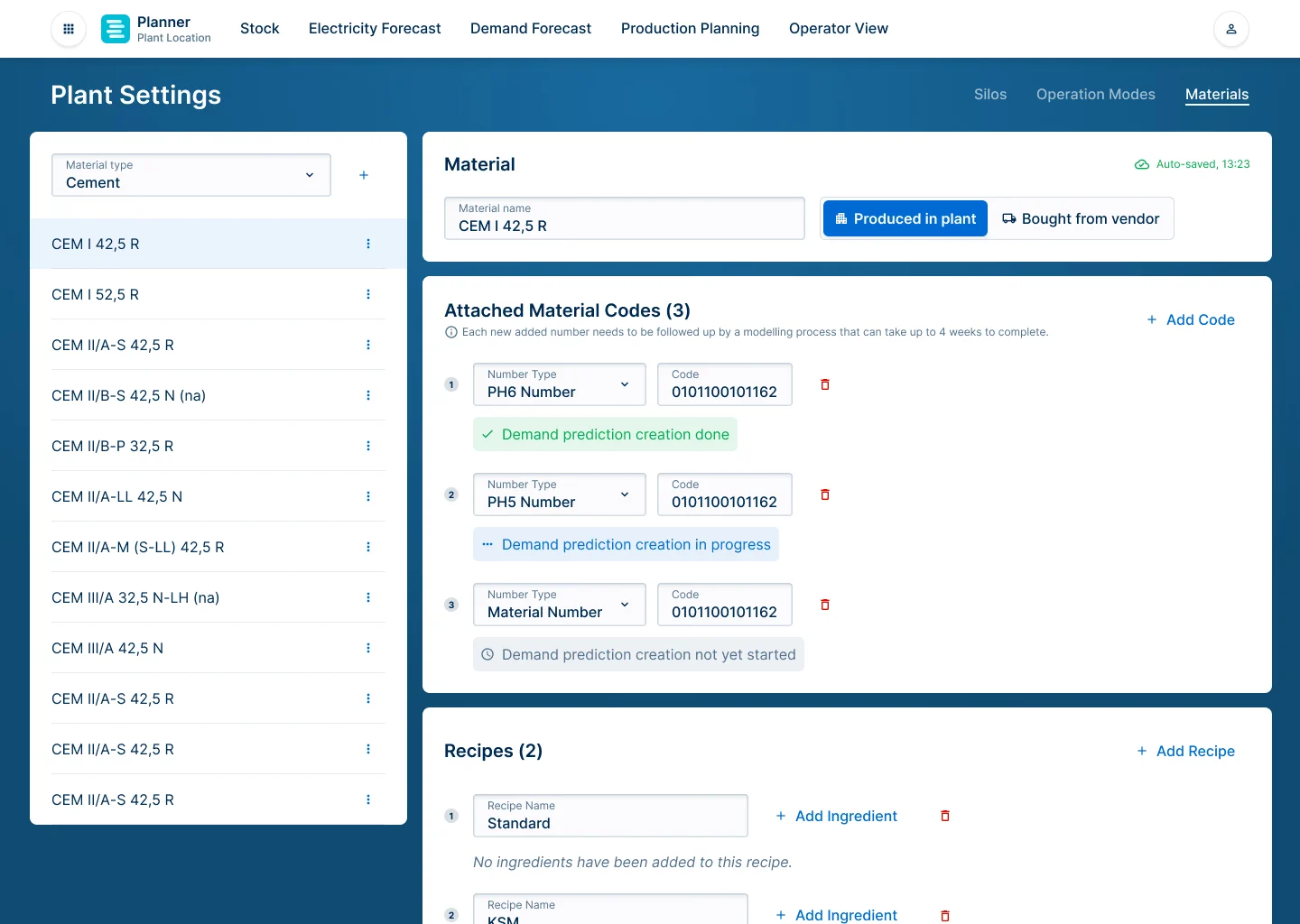
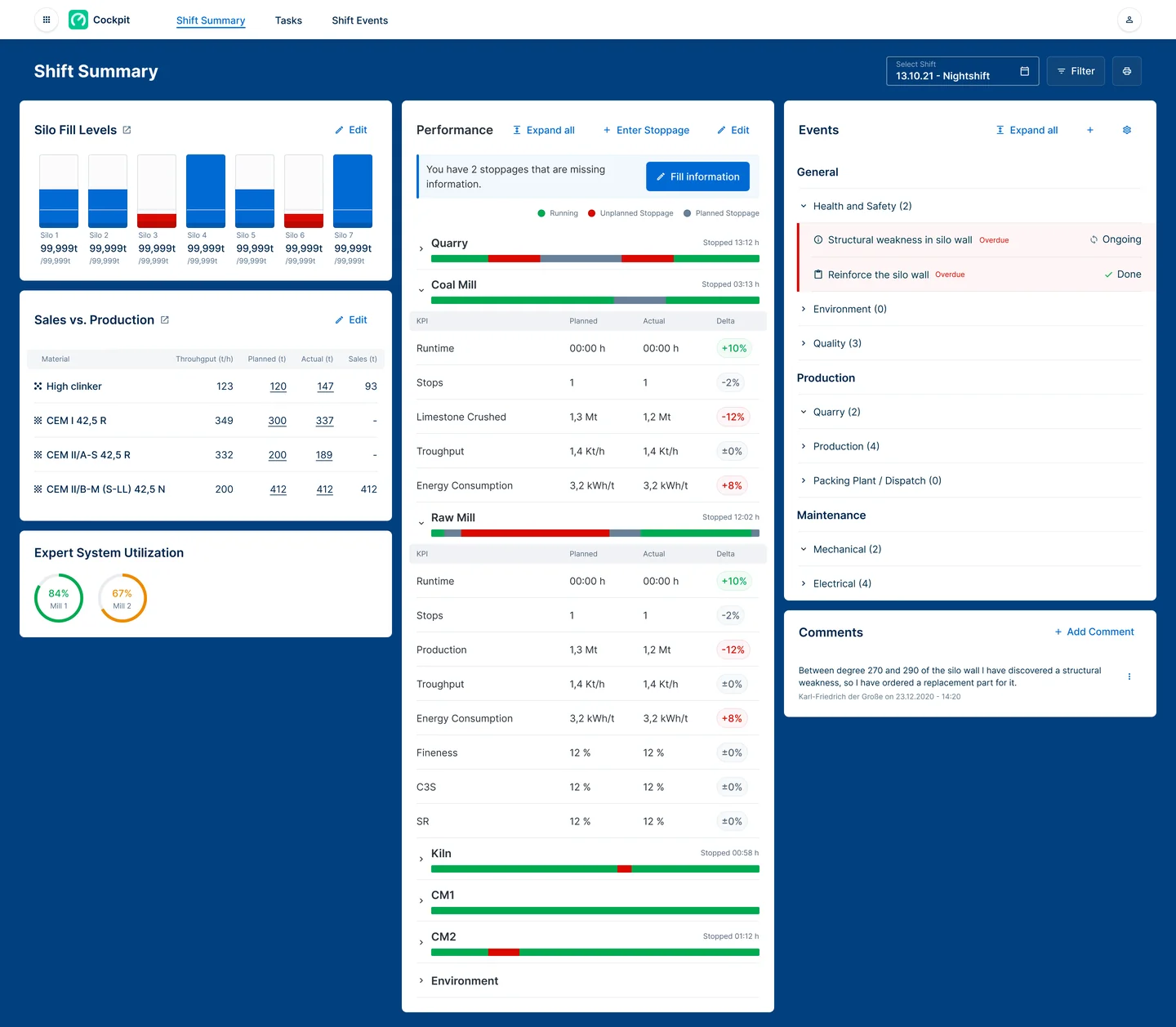
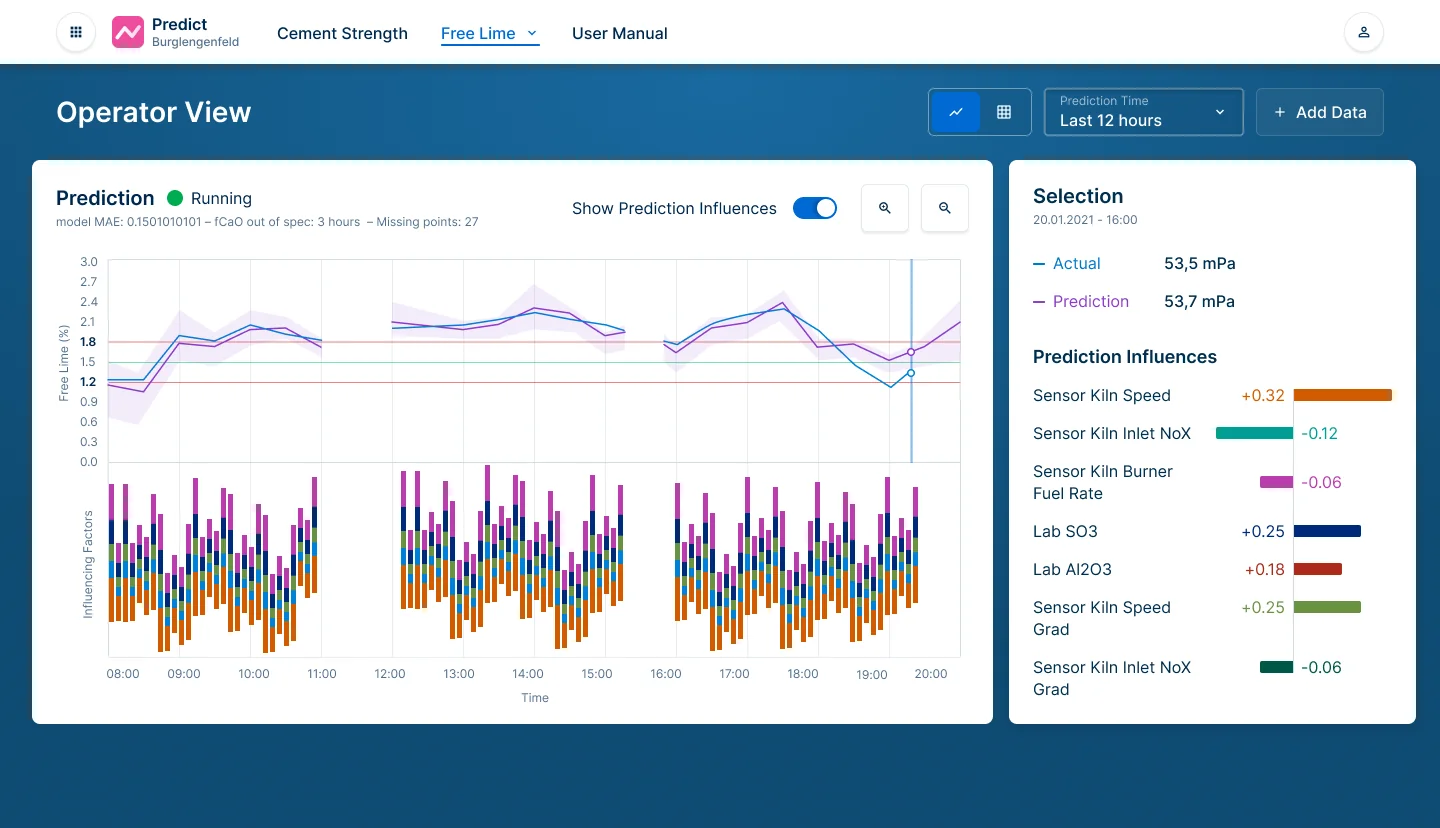
Eight products, one operation. Each covers its own part of running a plant, but they work from the same plant model, the same materials and the same design system.
Planning
 Planner
Operations
 Cockpit
 PlantLink
Maintenance
 Maintain
 EquipCheck
 EquipPulse
 EquipStore
Quality
 Predict
Shared foundations
- Plant model
- Materials
- Settings
- Design system
HProduce: eight products, grouped by the part of the plant they serve, on shared foundations.
My role
I became the UX perspective across the product suite. Instead of being permanently assigned to one product, I worked with the Product Owners of the different HProduce workstreams and kept the design perspective on how they connected.
At the same time, I led a UX team of designers and researchers: coordinating work, aligning priorities and helping resolve design problems across products. By 2024, internal resource planning explicitly identified a dedicated multi-person UX and research setup for HProduce.
Without one designer per product, a large part of the job was to orchestrate and prioritize. Through generative research and monthly check-ins with the product owners, I gathered what needed to be accomplished in the coming quarter, turned it into concrete UX tasks with (soft) deadlines on a planning board, and allocated them across the team.
The job itself changed with it: less time on individual screens, more on understanding how each decision affects the system.
Creating direction across products
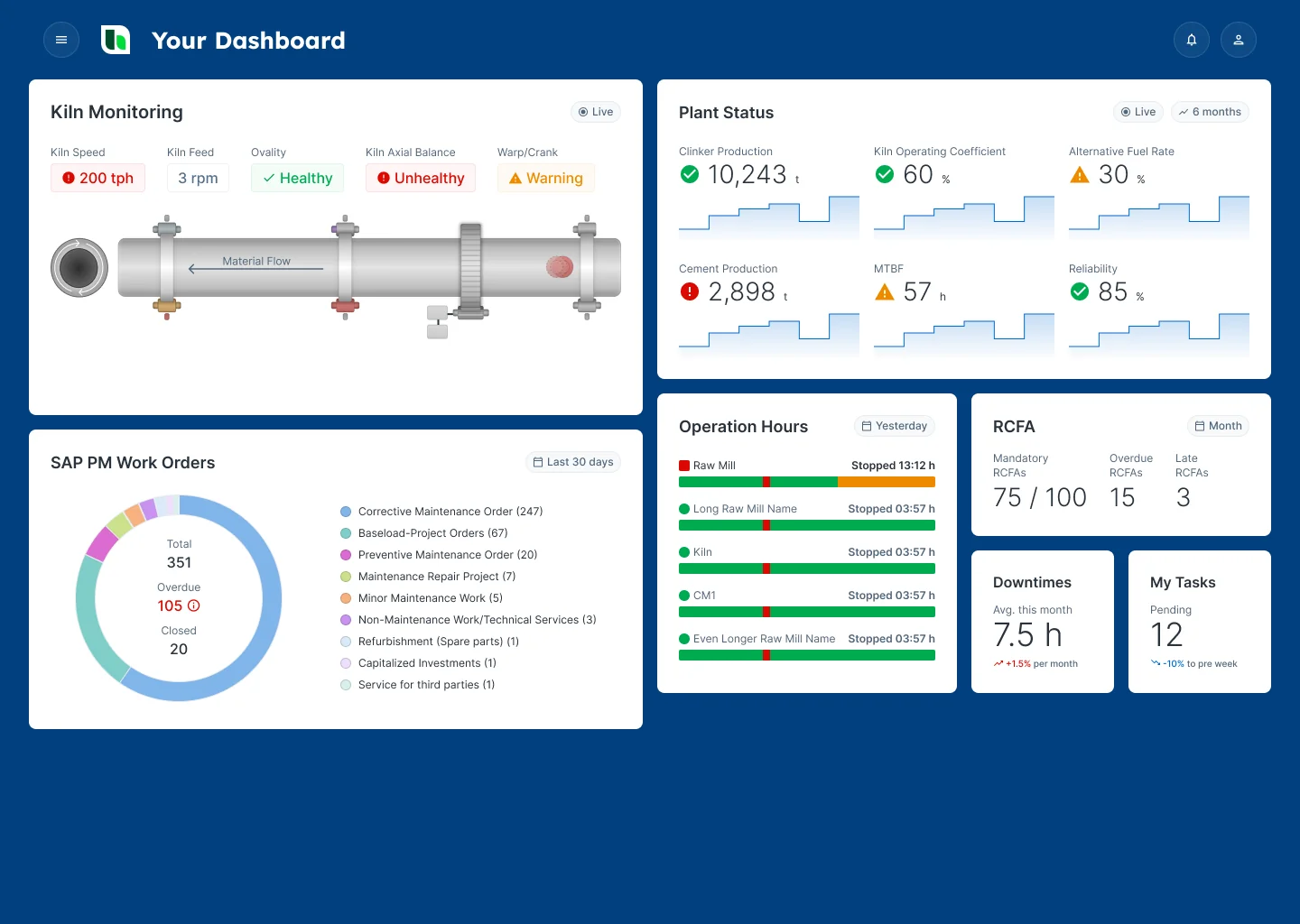
That meant regularly stepping above individual requirements. A good example was HProduce for remote operations. Rather than optimizing one isolated dashboard, I pushed the question of what HProduce needs to become relevant for remote operations, so we could identify a set of improvements to prioritize.
The same pattern showed up elsewhere. Reporting, materials, settings and navigation often looked like isolated UX questions, but were really questions about shared domains and the architecture of the whole suite.
Designing the underlying system
Over time, HProduce moved toward shared foundations. Plant and material structures, for example, became cross-product concerns: by late 2025, HProduce had explicit objectives to harmonize its foundational plant and material structure and to make metadata reusable across the suite.
Underneath the products, a shared design system that started in my team keeps patterns and interactions consistent.
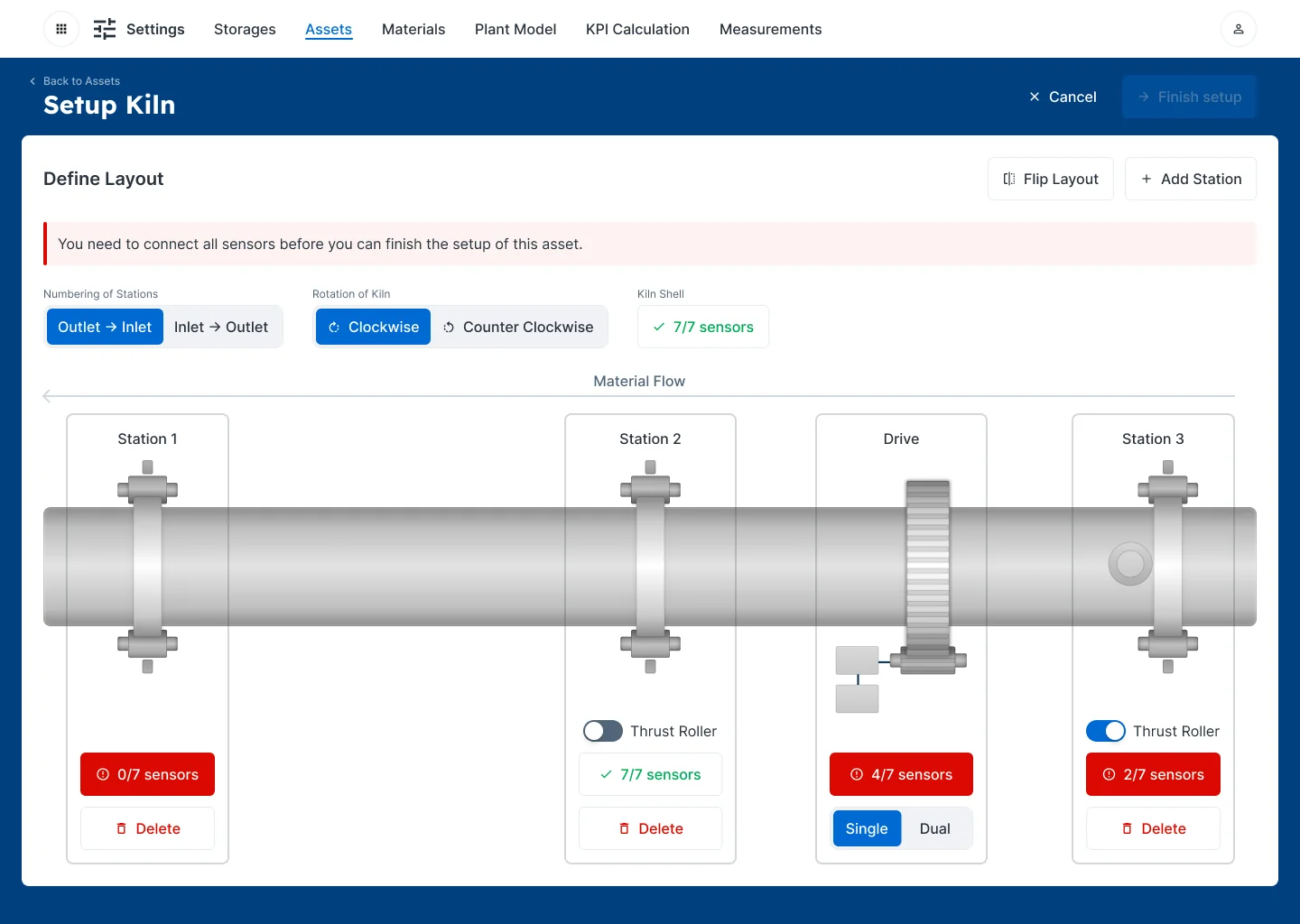
A UX problem in one product is often a systems problem in disguise.
Fixing the screen may improve today’s experience. Fixing the underlying model can improve the next ten screens.
How we worked
How many steps a piece of work needs depends on its scale, the resources available and how clear the intended outcome is. A small change can be simple: user feedback, design, specification, implementation. It gets complex when requirements are out of sync with what users expect, which usually shows up in validation and takes one or more iterations.
So we gave generative research enough time before the actual design work started. In the end, that proved to be the cheaper and faster way.
The impact
HProduce today spans production planning and optimization, downtime analysis, root-cause failure analysis, quality and production insights, shift reporting and plant KPIs. Its mission explicitly links the suite to operational efficiency, lower production costs and decarbonization potential.
Some solutions within the ecosystem produced significant operational savings. Others helped standardize activities such as failure analysis and build reusable operational knowledge.
For me, the most important outcome was broader: we moved UX from servicing individual products toward helping shape HProduce as a product ecosystem.
Evidence
- Saved per year
- €16M
- Operational savings across 100+ plants, by combining information that was not available before and making it actionable.
- Plants
- 100+
- Rolled out globally, to plants on all continents.
- UX Design Award
- 2023
- Planner won in the product category.
There are few people you meet during your career that show you what true professionalism and dedication look like. Florian is a rare example of such a person. Working with him has taught me how strong design leadership can elevate both the product and the team. He has an incredible ability to see both the big picture and the fine details that make an experience great. His dedication to excellence was carried through from brainstorming initial concepts to refining developed solutions. While being a strong and supportive leader, he also delivered on-point concepts incredibly quickly and precisely, drawing from his rich experience and finding solutions when others seemed lost. Beyond being a brilliant designer, he is also a generous mentor and a wonderful person who genuinely cares about people’s growth and success. Any team would be lucky to have Florian leading their UX practice.
 Anna LiatkouskayaDesigner on HProduce, in Florian’s team
What this project taught me
The larger the system becomes, the less useful it is to optimize individual parts in isolation.
My biggest contribution to HProduce wasn’t a single interface. It was being able to zoom out, understand how products, users, data and business decisions influenced each other, and then zoom back in far enough to help teams make concrete decisions.
That’s the kind of design work I want to do more of.