Work Optimizer
Turning operational complexity into a decision.
- Role
- Design Strategist
- Client
- Command Alkon / Heidelberg Materials
- Type
- 0→1 concept
- Scope
- Research, concept, handover, consulting
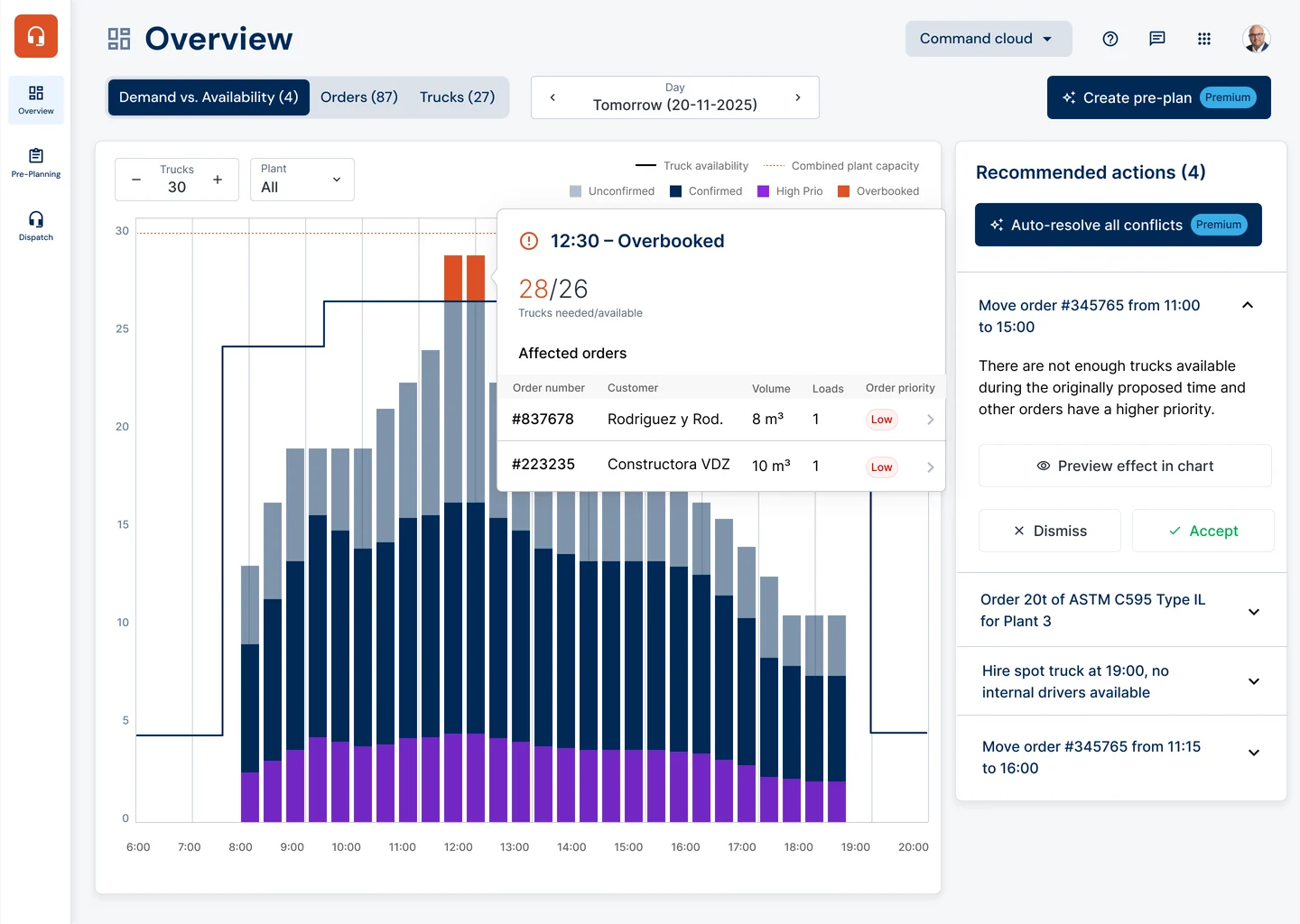
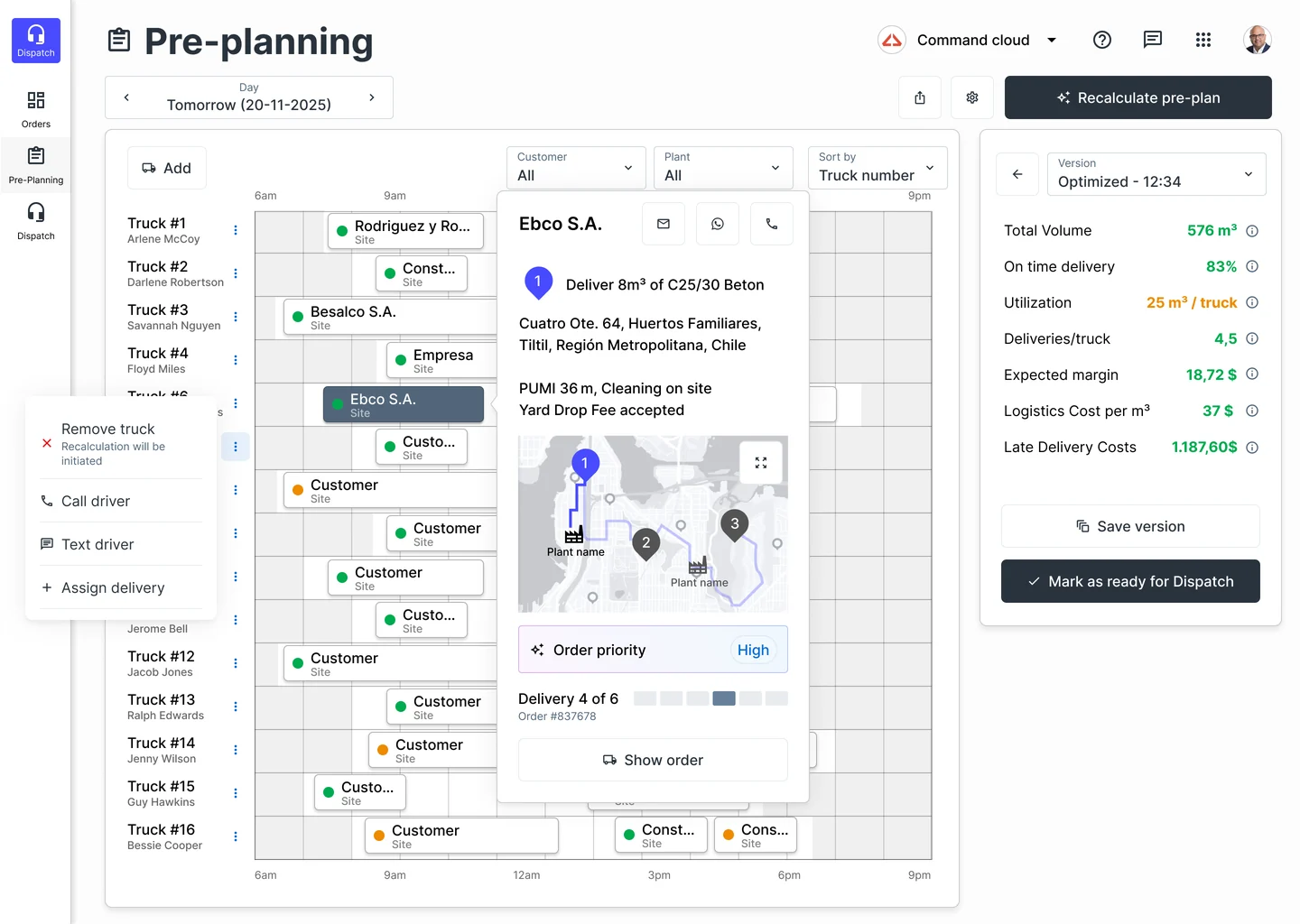
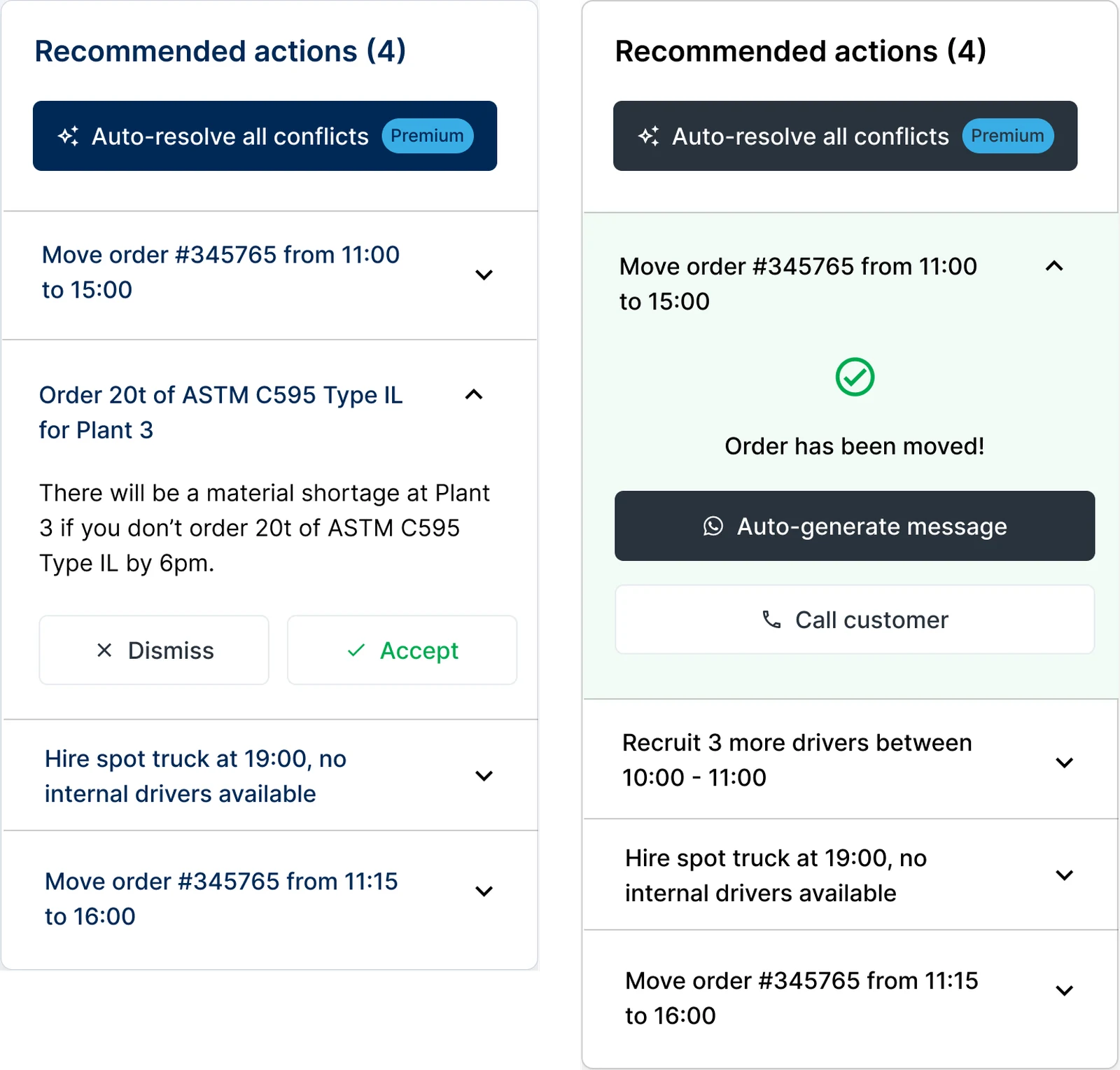
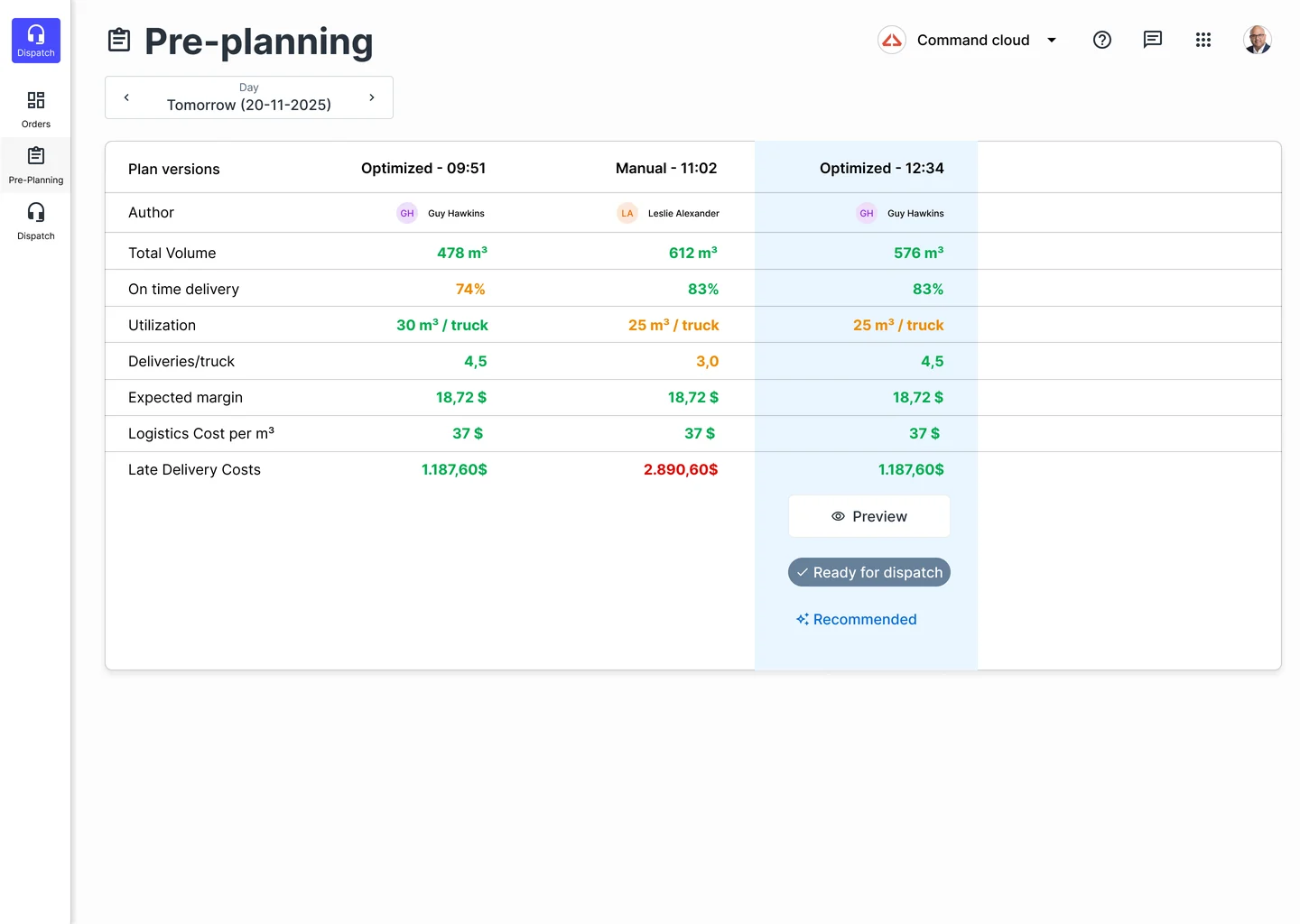
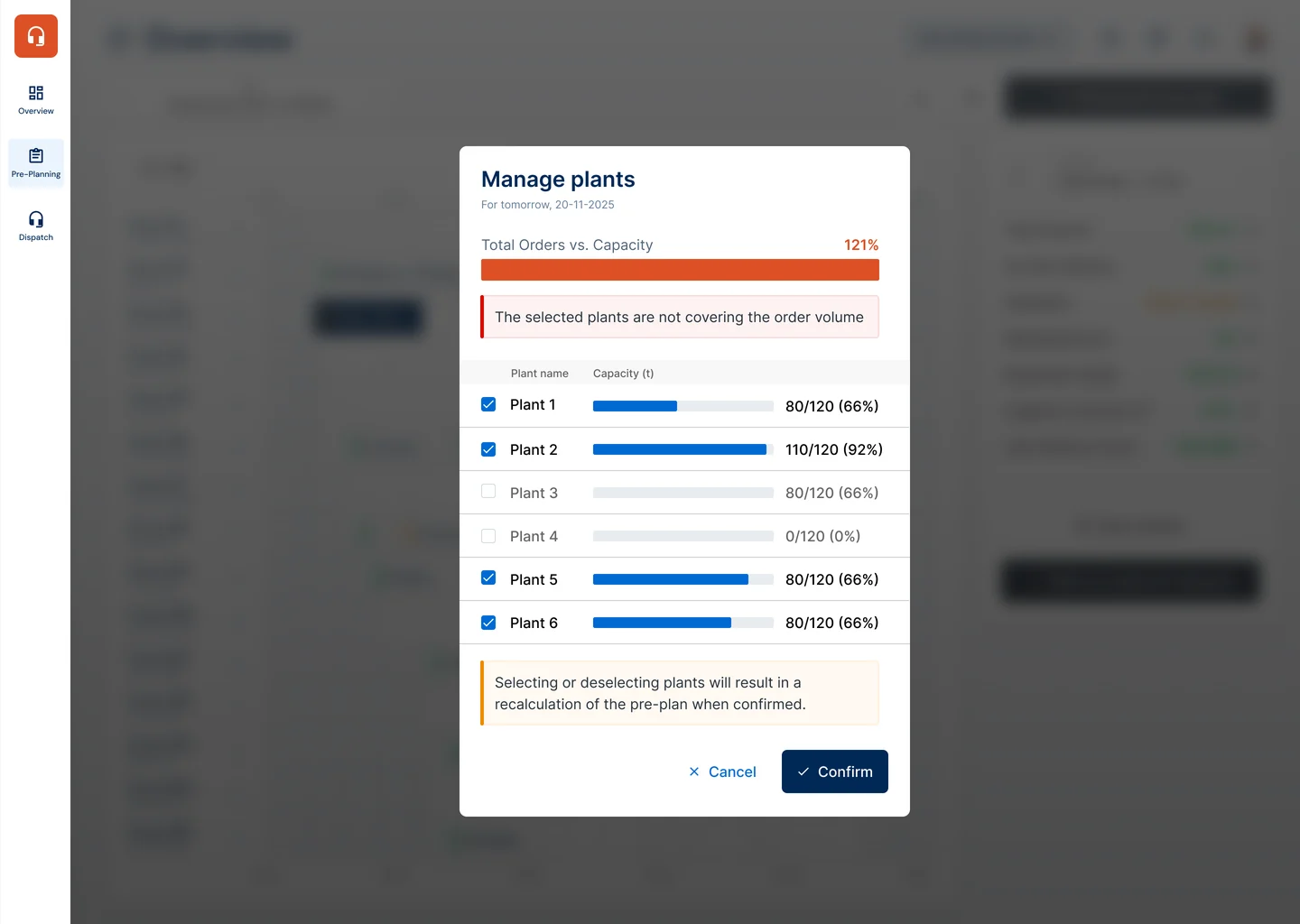
Wireframes. The screens on this page are wireframes from a three-week concept phase. They are deliberately low-fidelity: the aim was to work out structure, logic and decisions, not visual polish.
Context
Imagine trying to continuously coordinate orders, plants, trucks, drivers and deliveries across a region. Now imagine doing that while conditions change throughout the day.
That was the problem behind the Command Alkon Optimizer. The concept aimed to bring demand, production capacity and fleet availability together, so an AI-powered optimizer could create a pre-plan and continuously support dispatch decisions as conditions changed.
The challenge
Dispatchers already make these decisions. The problem is the number of variables they have to consider:
- Orders: what needs to be delivered?
- Production: where and when can it be produced?
- Fleet: which trucks are available?
- Drivers: who can operate them?
- Logistics: how can deliveries be orchestrated efficiently?
The ambition wasn’t to remove humans from the equation.
It was to help dispatchers make better-informed decisions, while automating repetitive planning work.
Start with the operation, not the AI
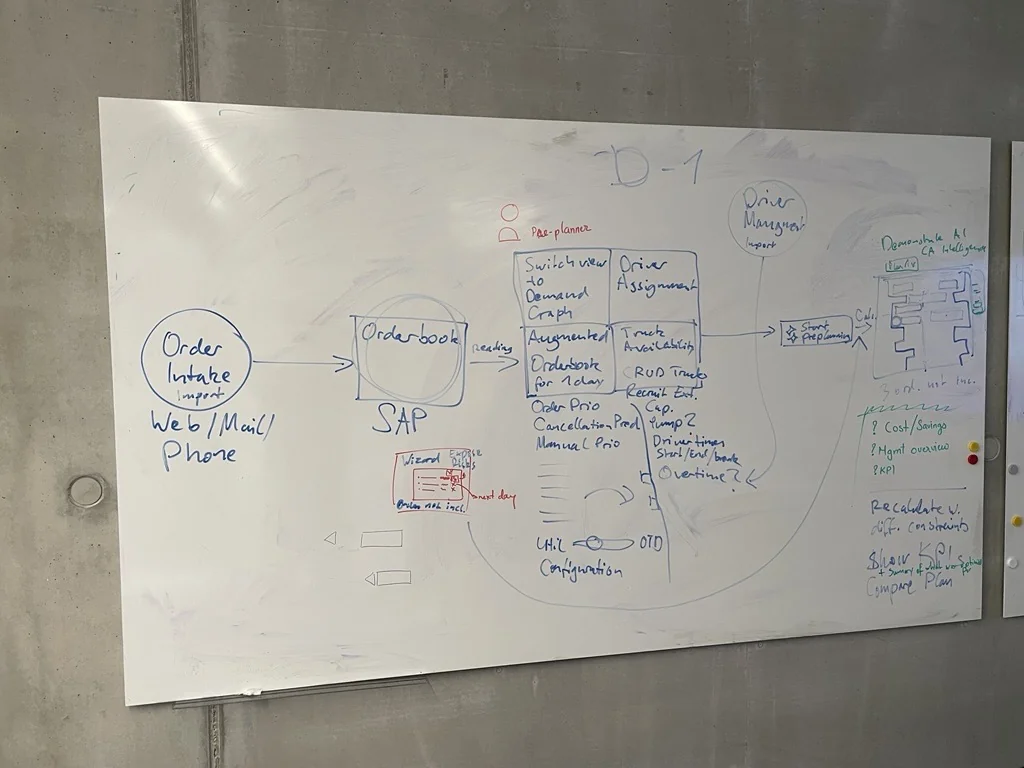
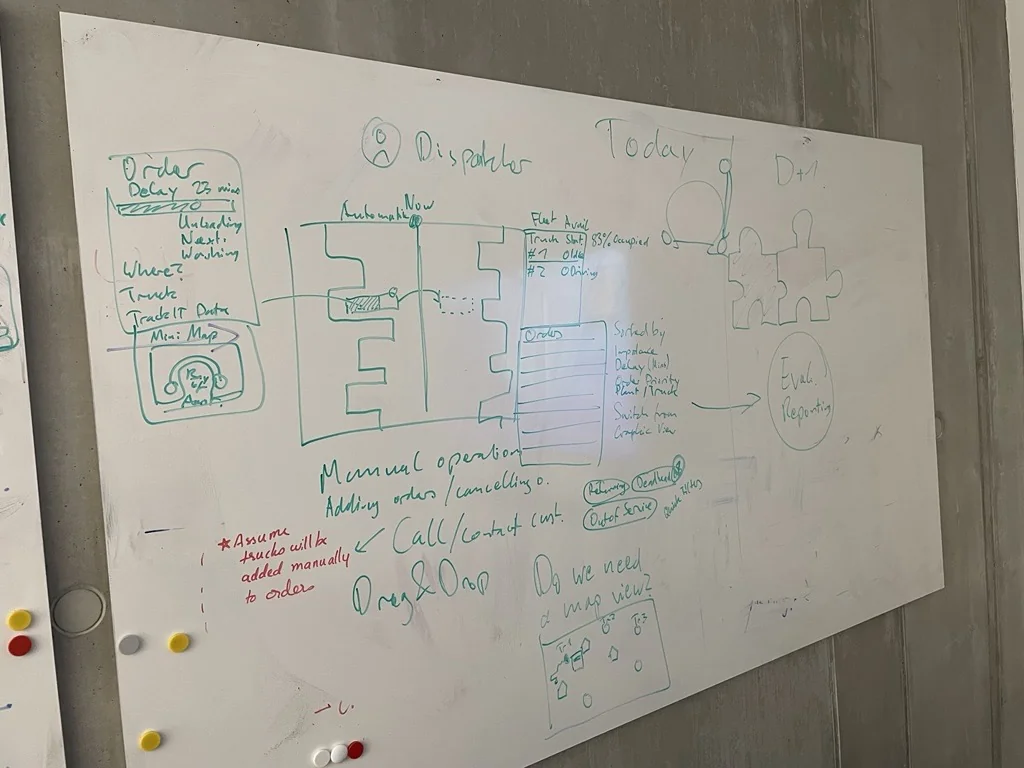
Before designing the optimizer, we needed to understand both Command Alkon’s existing product environment and how concrete dispatch actually works.
We involved people with operating experience and asked for feedback from markets already using Command Cloud. The research explicitly targeted dispatch managers, operations managers, sales managers and business owners: people who understood both the workflow and its economic consequences.
Customer feedback became part of the concept iteration too. Feedback from Polpaico, for example, was reviewed specifically for what it meant for the proposed solution.
Making the invisible visible
An optimization engine can produce mathematically better answers. That doesn’t automatically make it a useful product. The dispatcher still needs to understand:
- What is happening
- Where problems exist
- What the system recommends
- What happens if something changes
So the design explored not only the plan itself, but recommendations, performance indicators, customer and delivery views, different plan versions and operational interventions.
Iterations in Figma worked through late deliveries, load volumes, logistics costs, fleet availability and customer performance, and whether a recommendation should be accepted, skipped or modified.
The aim throughout was to make optimization understandable and actionable.
Pre-plan. Dispatch. Adapt.
The concept deliberately considered two different moments.
- Before operations begin
- Create an optimized pre-plan from known demand, production capacity and available resources.
- During the day
- Respond as reality diverges from the plan: traffic changes, deliveries run late, resources become unavailable, travel times differ from assumptions.
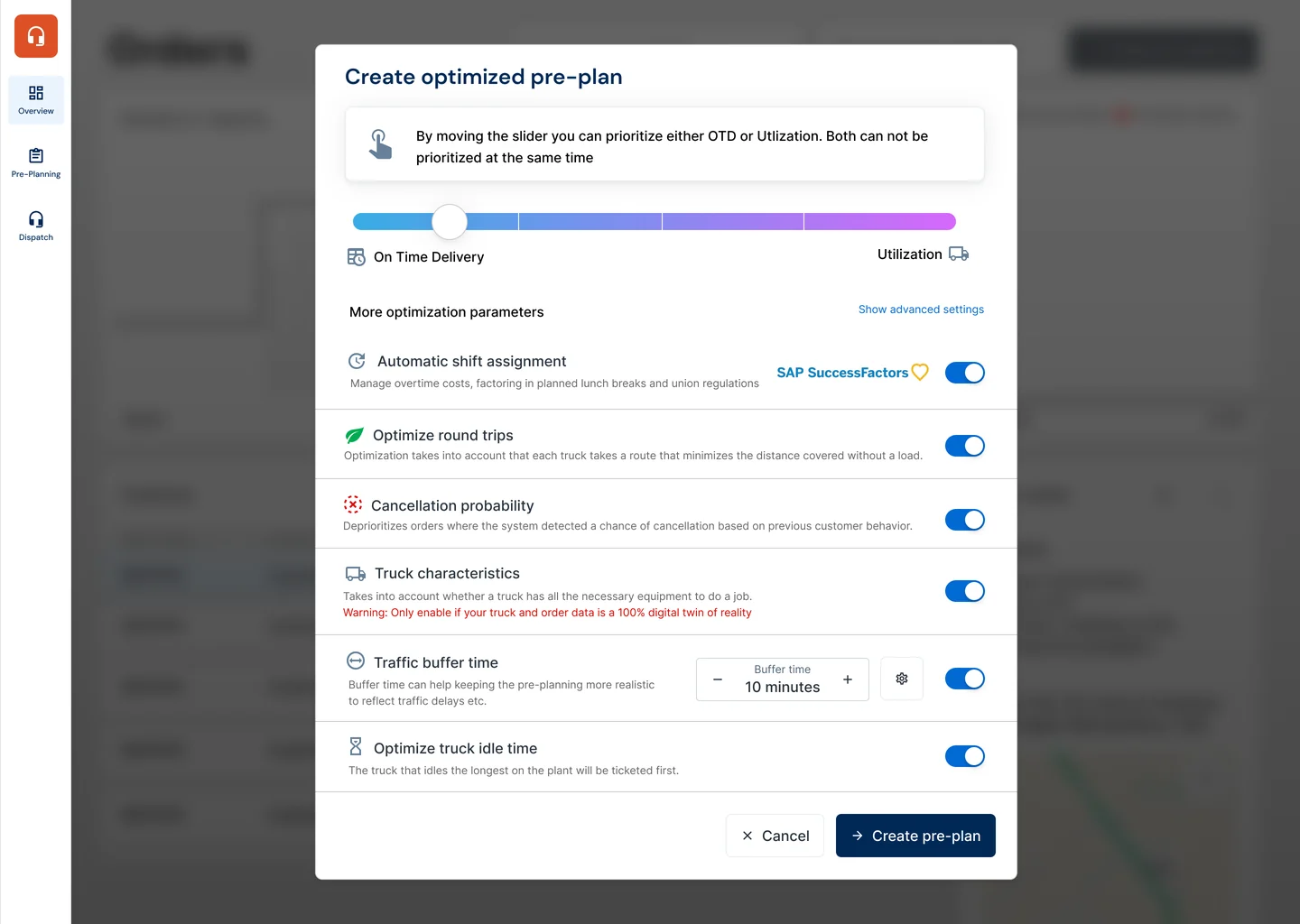
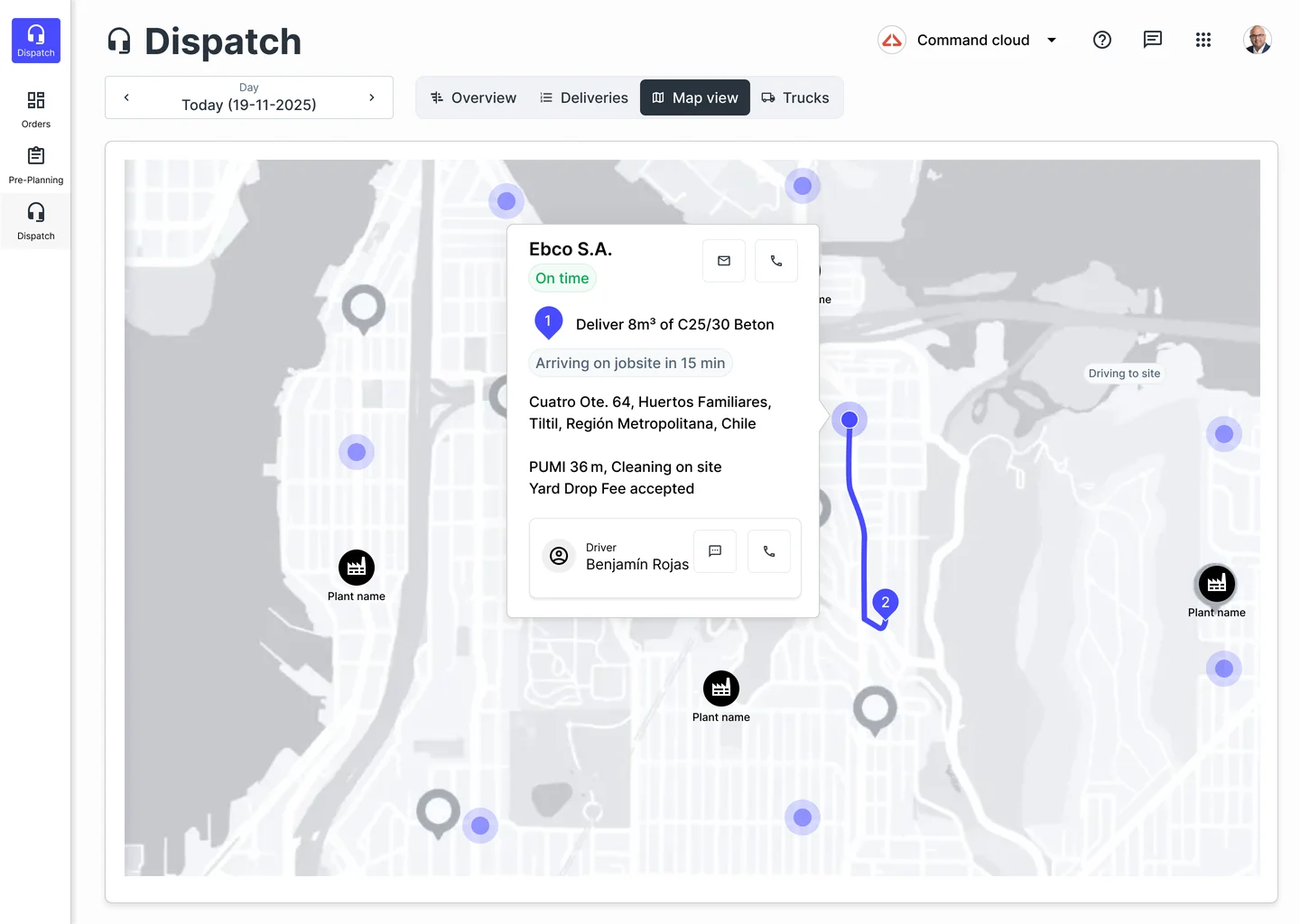
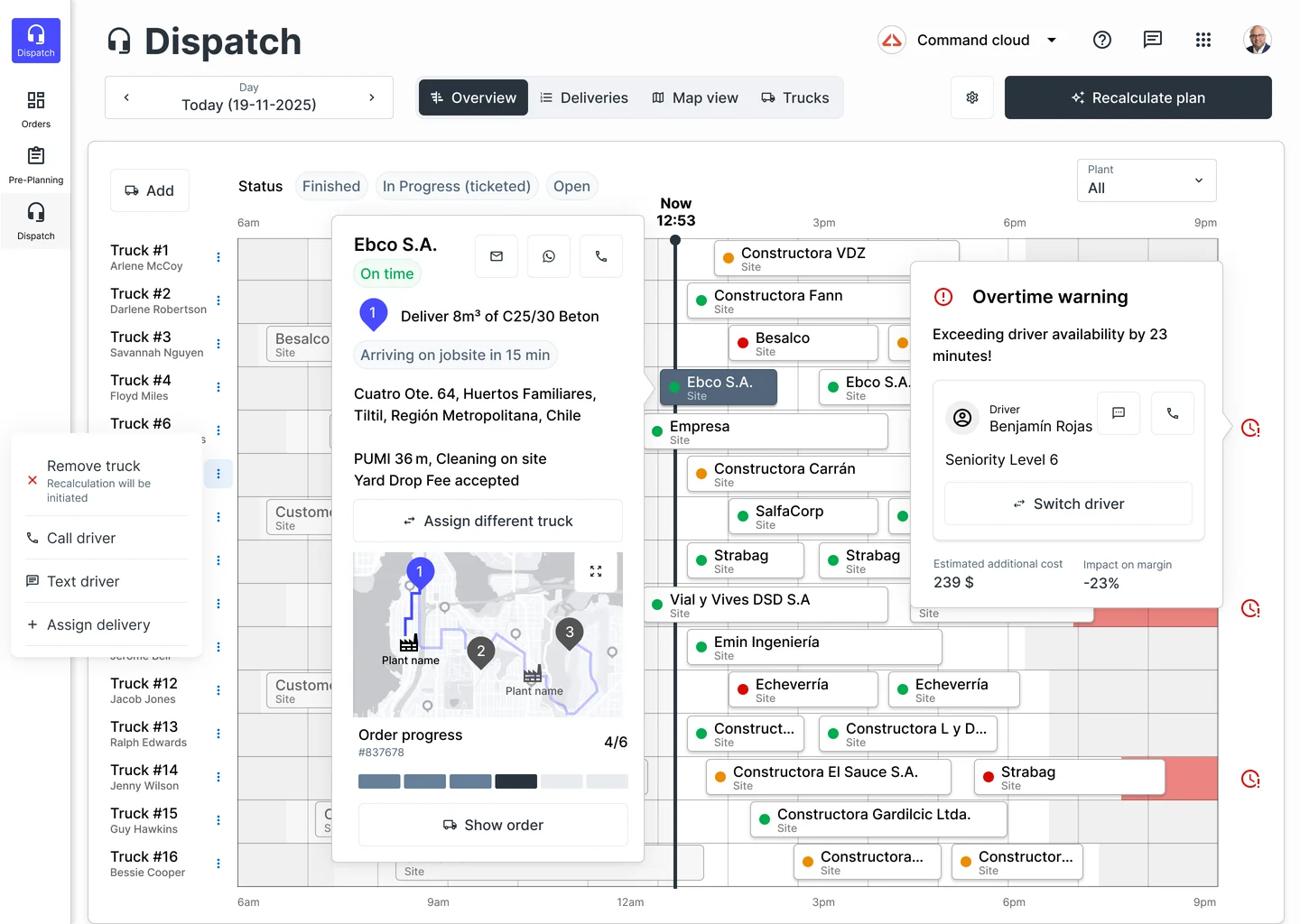
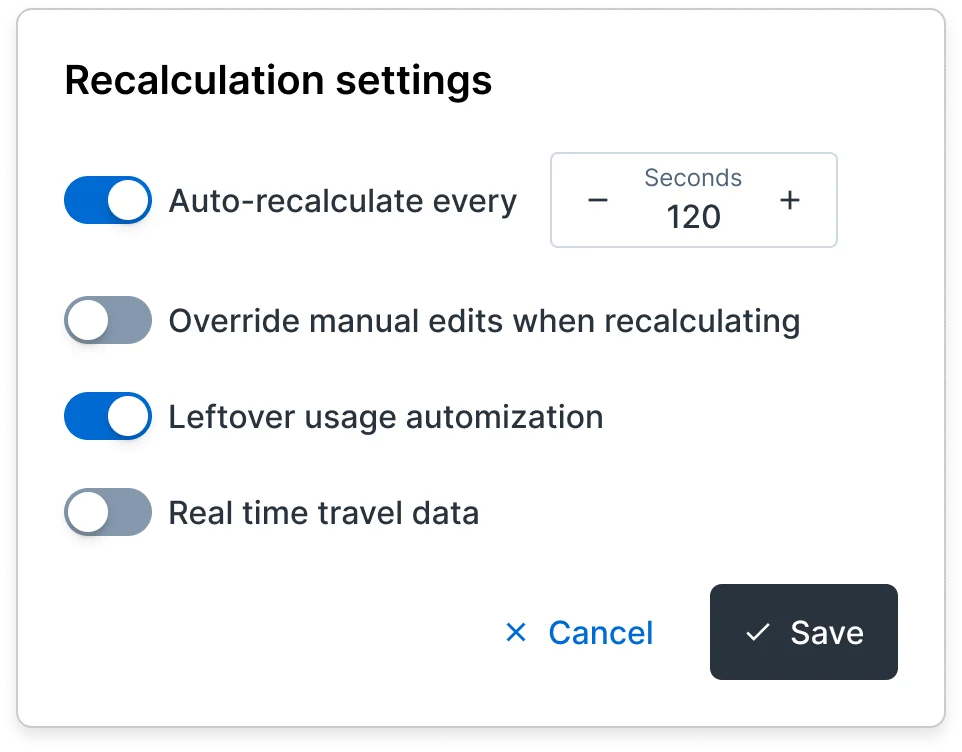
Planning shouldn’t end once the day begins.
From concept to product direction
The value of the concept quickly moved beyond interface design. A Command Alkon product leader described the visual representation as useful for customer conversations, for discovering missing requirements, for generating ideas and for communicating the broader Command Optimization vision.
The concept was then used in a real customer conversation with Polpaico. Internal project reporting credits it with a key role in the broader Cloud Dispatch strategy, and later customer conversations followed the blueprint first used with Polpaico.
By early 2026, customer and sales interest had led to further discovery conversations, and our role shifted toward letting the Command Alkon product team continue the development.
Not to own the product forever. Create enough clarity that the product team can take it forward.
What this project taught me
A good concept isn’t just a proposed solution. It’s a tool for having a better conversation about the future.
The Optimizer turned an abstract AI ambition into something customers, product managers and operators could react to. And those reactions made the idea better.